Saturday, June 10, 2017

Gauja National Park

Today was sunny and we set off for Siguida. Not only were there a lot of other cars on the road, but there were also lots of roadworks.

It is a very pretty part of Latvia and just now in early summer it is very green. Our first stop was in Cesis, where there are the ruins of Wenden castle built in 1214 and sacked by Ivan the Terrible in 1577. Side by side with the ruins is the 18thC manor house.

We were supposed to take the cable car across the valley to Turaida but as it was not open we drove around. Not only are there the castle ruins but also extensive gardens and a sculpture park.
 The ruins of Wenden castle at Cesis.
 The lady who looks after the medieval kitchen garden at Cesis.
You can see the beds of herbs behind her

 In the manor house there is a collection of 19thC furniture.
A reconstructed village dating from about 1100 A.D. 
A very nice roadside restaurant where we lunched.
The fine dresser behind the bar.
The stork who brings Good Luck to the cafe.
Among the ruins at Turaida
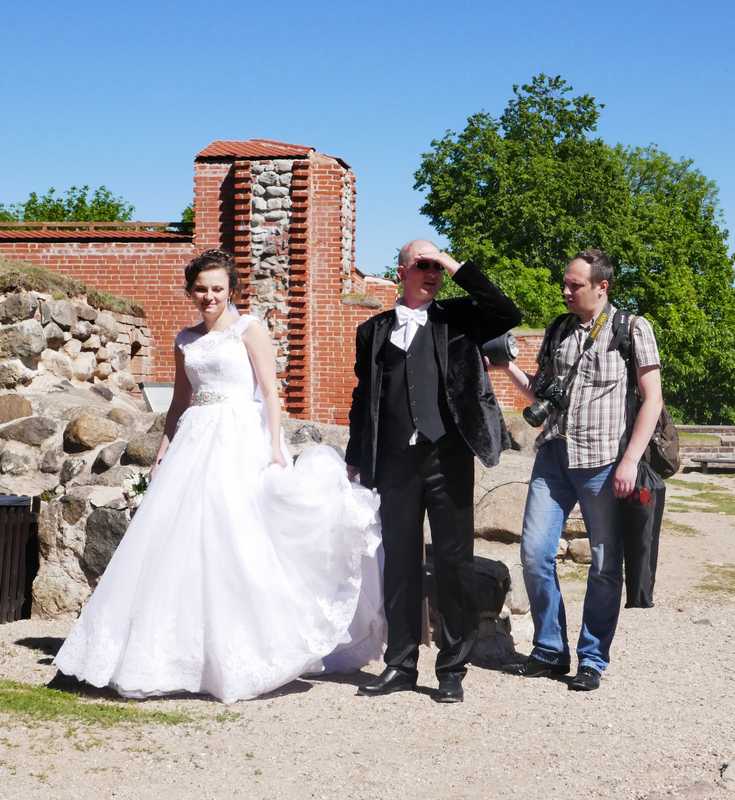
A popular spot for wedding photos.
One of the staff at the Turaida museum park.
Chinese tourists have discovered Turaida.
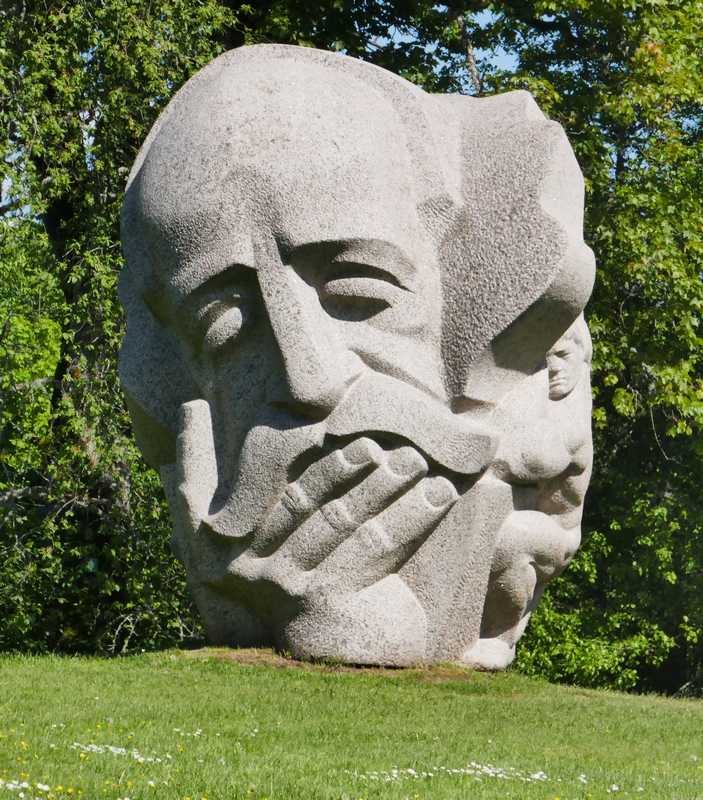
It is also a sculpture Park.
And home to wildflowers.
Aldis (our driver) and I try out the Kaiser's chair at a famous viewpoint.

Friday, June 9, 2017

Riga, Latvia

June 8th

Riga is famous for grand Art Noveau buildings. Apparently around 1900 there was an economic boom and the newly wealthy were looking for things to spend their money on and so they built grand houses. Michael Eisenstein (Father of Sergei Eisenstein the Russian filmmaker) was one of the important architects. As you might imagine we had an excellent guide today. Marada(?), not only is her  English excellent but she has also studied Chinese and lived in Wuhan so she is ready for the arrival of the Chinese tourists!

Once again, we had a walking tour - fortunately the weather was sunny and mostly there are footpaths so I did not have to negotiate too many cobblestones.
 Street in Riga
 Our room in the Gutenbergs hotel. Apparently for many years the building housed a printing works and I guess this is a remnant of the press. It certainly adds ambience but you have to be careful not to hit your head!

 The steeple of the cathedral originally built in the 13thC
Typical flamboyant facade
Kindergarten outing
Blackheads house built in 1344 for the Blackheads, a guild of unmarried German merchants. It was bombed in 1941 and later completely flattened by the Soviets, but the original blueprints survived and it  was rebuilt in 2001.
A familiar figure, St George and the dragon.
A Viking boat on the river.
An Australian bought this Heritage listed house and started to destroy it but a local architect bought it from him and restored it but I am not sure of  the significance of the kangaroo..
 Behind the swans is the Riga - Stockholm ferry.
One of Eisenstein's flamboyant Art Noveau buildings.
Typical decoration.
One of the five market pavilions. The fruit and vegetables were good quality and cheap.We stocked up on apricots, cherries and strawberries.
Flowers of course.

Thursday, June 8, 2017

Another day, another country

Riga, Latvia. June 8

We left and drove through pretty undulating country in intermittent rain.
 
Our first stop was at an underground bunker 9 metres underground with 5 metres of concrete and lead above so the government could shelter for up to 3 months in the event of a nuclear attack.

We bought ourselves lunch in the cafe although I doubted the coca Cola ad was appropriate the pastries were nice although the staff had the genuine Soviet surliness.

The next stop was at the Open Air ethnographic museum. It was raining and there were mosquitoes but otherwise interesting. Now in Riga a genuine big city (but less than 1 million). Our hotel is nestled next to the cathedral and I can see plenty of other church spires out the window.
We thought we were going upmarket when we saw this Bentley but it turned out our car was a Ford van which also was good.
The road ahead mostly excellent in Estonia.
Typical farmstead in Latvia.
Who would have guessed that under the hotel there was a bunker.
Natasha our guide shows us the 1980s equivalent including the red telephone to Moscow.
Bill poses beside a model complete with gas mask.
Lenin presides over most things.
One of the Soviet era posters warning of the danger of loose lips.
Interior of 1704 church in the Open Air museum.
Loved the angels amongst the clouds on the ceiling.
One of the buildings in the museum.
19thC peasant furniture.
Another peasant house.
Don't know the significance of this but it appears to be Christian.
Off to explore Riga now the sun has come out.

Wednesday, June 7, 2017

Tartu University

King Gustav II Adolph of Sweden established the University in 1632 but it has not been all smooth sailing. Due to the Great Northern War (which I had never heard of) it was closed from 1710 until 1802. Most of the old buildings date from the reopening and it is a very pretty spacious campus with wide expanses of lawn with mature trees. This was not the only time the university was closed. The First World War also saw it closed and then in the fifties the Soviets built a big airbase next to Tartu and the whole city was closed until about 2000.

After inspecting the University we stocked up on chocolate and then asked the guide, Christa to drop us at the new National Museum. It has all the latest technology which works really well. For example you have a card which when you touch the icon turns the text to English. There are also wheelchairs available.

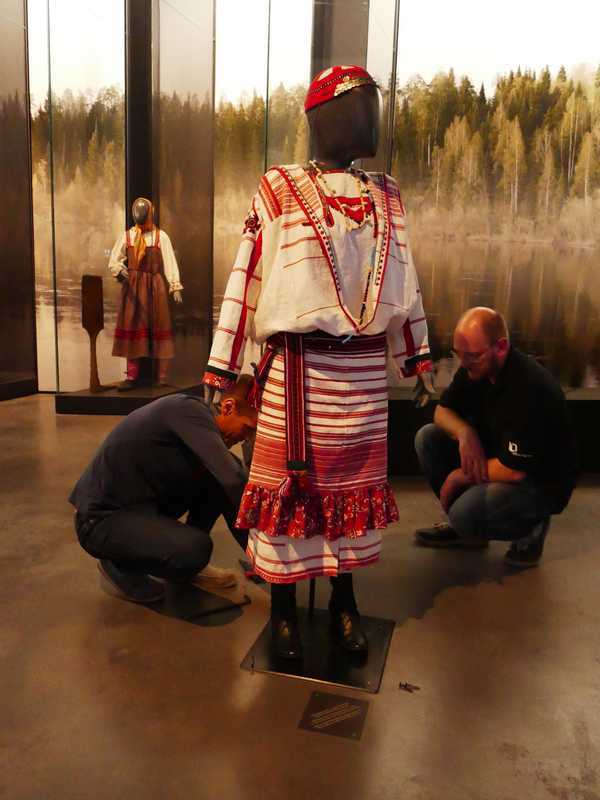
The first section was called 'Echo of the Urals' and had beautiful embroidered costumes and told of the stories and customs of the people.

The other big section was  modern history including about the Soviet times.
Our hotel Villa Margrethe.Our balcony is on the right.

The front of the hotel. There are a lot of wooden buildings in a similar style.
Classical building of the University, It now has about 14,000 students and over 1,000 are foreigners and a lot of classes are in English.
One of the new buildings.
Kindergarten excursion.
House of Culture -literature
Oscar Wilde and an Estonian poet whose surname is also pronounced Wilde.
The famous kissing fountain in front of the Town Hall.

 Ruins of the cathedral of St Paul and St Peter
Some of the terracotta figures from St John's church.
From the display Echos of the Urals
More costumes
Home made lawnmower from Soviet times. The maker had to take a job as a taxi driver to access the company workshop to make the blades.

Another display was of ghastly shoes. Apparently for a wedding you got a special ration to buy your wedding outfit, but there was no guarantee the shop would have the correct size. One couple donated their outfits to the museum. His shoes were one size too small and hers were too big!