Saturday, November 5, 2016

Fabric and Kitchen Stuff in Tokyo

November 2nd, 2016

On Wednesday we did Fabric Town and the Kitchen Street. Fabric Town is in Nippori district, a quiet residential area and has over 80 shops selling fabrics and associated sewing things such as buttons and braids. Tomato is bigger than most and is a bit like Spotlight with an overwhelming range of Japanese cottons.

Next stop was Kitchen Street or Kappabashi which has a whole row of shops selling everything you need to run a restaurant. As you might imagine it includes some lovely ceramics, an incredible range of sieves as well as the plastic display models of fruit etc. I was not convinced the apple peeler gadget would work well. Unfortunately I forgot to take any pictures of specific displays or items..
Note the umbrella hook
Bit out of order. This was on the river cruise boat and it was no exaggeration. My head hit the ceiling and I am not tall.
Not quite St George. He has a bow and arrow.
 
Inside Tomato
Residential building in Fabric Town.
Quilt design?
Animals travelling on trains should be caged.
As you can see I am rather taken with the quirky signs.
Verandah Tokyo style.
No idea what these represent. There was a whole row of them.
Trees around the Imperial Palace.


Tokyo Part 1

Another Shinkansen ride to Tokyo and then a taxi to the Hamarikyu gardens near the mouth of the Sumida-gawa a large river flowing through Tokyo.

Mural in a station.
 
Chrysanthemums.
Bullet trains in abundance.
AED (Automated External Defibrillator)
I have been impressed with the help for disabled and medical emergencies. There are braille labels by the lift buttons for example. 
View from the train - the big city!
Hamarikyu Gardens - an oasis of calm near where the Sumida river flows into Tokyo Bay.
 Sketching in the Gardens.
I guess it was not so peaceful during duck hunting season.


View from the river.

Variety of buildings along the riverbank.
Murals along the waterfront.
Sensoji, the oldest and most popular Buddhist temple in Tokyo.

Details of the temple.

Around the temple were plenty of girls in kiminos, These 3 turned out to be Thai tourists from Chiangmai.


Rickshaw rides at the temple.
Back at the train station.

Wednesday, November 2, 2016

Hakone

October 30th, 2016

We had dinner at a great French restaurant last night and this morning caught the train to Hakone. As always first stop at the station is for 'lunch hunting'. In Hakone we first went cruising on Lake Ashi, but there was no sign of Mt Fuji. Our next stop was the Mt Komagatake Ropeway - an aerial cableway but there were no sweeping views of Mt Fuji or anything else!

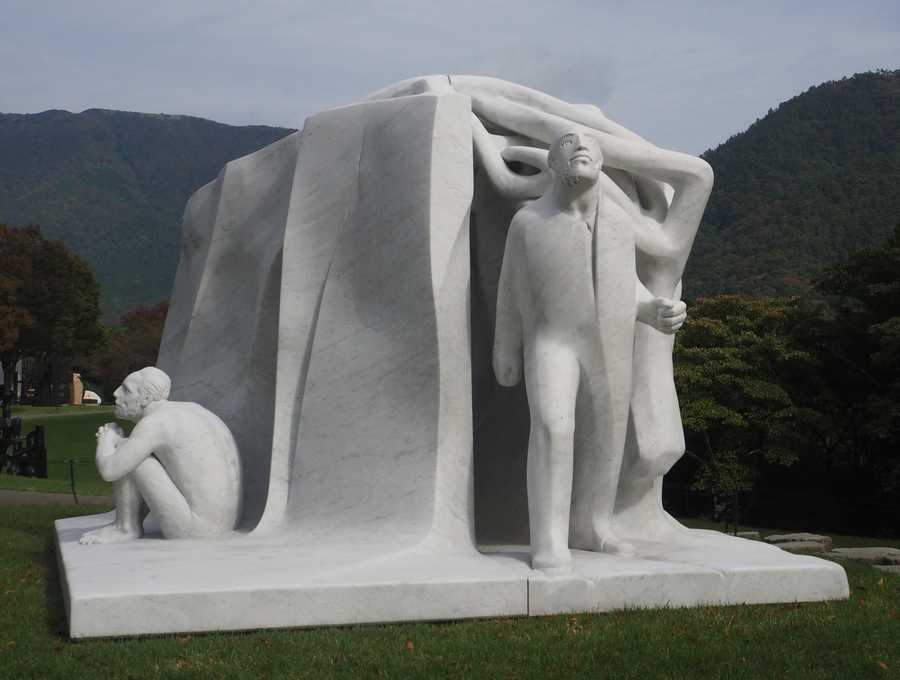
Next morning was quite a different story. From the balcony outside our room Mt Fuji had appeared and the clear blue skies lasted most of the day. We traveled by minibus and went first to Hakone open air sculpture park. I think sculpture often looks better in the open air and this is a terrific collection in a fabulous setting - manicured gardens surrounded by mountains. Maya, Picasso's daughter left her personal collection to Hakone and there are lots of Henry Moore pieces and from many other artists.

Next stop was the Kubota Itchiku collection - no photos allowed but the work is extraordinary.
He revived the art of Tsujigahana  silk dyeing which had been used to decorate elaborate kiminos. It is extremely labour intensive and time consuming.
Another autumn view from the train.
Lunch hunting territory at the station.
Read carefully
Some lunch possibilities

Still on the train

Green tea at 250 km/h.
 Japan Rail station staff are incredibly helpful.
Lake Ashi, but still too misty to see Mt Fuji
What is a pirate ship doing on Lake Ashi?

Torii gate at a lakeside shrine.
 Fancy a boat ride. Big corporations had lodges here for their employees to holiday. After the financial meltdown they were sold often to local government.
Mt Fuji. We tracked it as it constantly changed during the day. It is easy to see why artists such as Hokusai were fascinated.
Hakone Open Air Sculpture Park
Picasso

Mt Fuji again.
The gardens at the Kubota Itchiku Gallery.
Traditional handicrafts in Hakone

Last  views of Mt Fuji.